



grass carp specimen
Grass carp (Ctenopharyngodon Idella) is a fish animal of the genus Grass Carp in the family Cyprinidae. Grass carp is long, slightly cylindrical, with flat tail, round abdomen and blunt head. The end of the mouth is curved and does not need to be. The maxilla is slightly longer than the mandible. The eye is small and the eye diameter is smaller than the kiss length. The hypopharyngeal teeth are comb-shaped with transverse furrows on the tooth side. Scales of medium size, lateral scales; The body is tea yellow, the abdomen is gray, the chest and ventral fins are slightly gray yellow, and other fins are dark. [15] Because of its staple food water plants, hence the name. [16] together with herring, silver carp and bighead carp are called "the four major fish".

Carp specimen
Carp (scientific name: Cyprinus carpio, Cyprinidae) is one of the most widely distributed and economically valuable freshwater fishes in the Cyprinidae. It is widely distributed in rivers, lakes and reservoirs in Eurasia. It has been domesticated by humans for more than 2000 years because of its strong adaptability and high fecundity, and is known as "the cornerstone of freshwater culture". Eurasia temperate to tropical freshwater basins, such as the Yellow River, Yangtze River, Volga River, Danube River. Freshwater ecosystems in North America, Australia and other places, some species become invasive species (such as koi flooding in North America).

Borneo River herring specimen
Borneo River herring (scientific name: Sardinella borneensis, English name: Borneo River Sprat) is a small migratory fish endemic to Borneo Island in Southeast Asia. It is mainly distributed in the freshwater and estuarine ecosystems of the island and is an important resource for local fisheries. It belongs to the family Herring, which contains about 20 species of river herring and is a common group in tropical and subtropical waters and freshwater basins. It is endemic to the Kapuas, Barito and Kinabadang river basins on Borneo Island, commonly found in floodplains, estuaries and low-salinity coastal waters, and occasionally in offshore waters.

Specimen of Orinoco River Pomfret
The Orinoco River short jaw carp belongs to the family Prochilodontidae (Characiformes), including about 20 species of short jaw carp (Prochilodus). It is a small economic fish unique to the Orinoco River Basin in South America. It is an important local food fish species and is famous for its tender meat and strong fecundity. Mainly distributed in the Orinoco River basin in South America, common in the main stream, tributaries and floodplain lakes, preference for sandy or gravel bottom of the lower waters.

Catfish Specimen
Catfish (scientific name: Bagridae family, representing species such as the long-snout Leiocassis longirostris) is a kind of carnivorous benthic fish distributed in the freshwater waters of Asia. It is famous for its wide head, scaleless body surface and delicious meat. It is an important economic fish. It contains about 20 genera and more than 100 species, widely distributed in freshwater basins in East Asia, Southeast Asia and South Asia. It is mainly distributed in the Yangtze River, Yellow River and Pearl River basins in China, the Mekong River, Salween River in Southeast Asia and the rivers, lakes and swamps in the Ganges Plain of India. It is common in the bottom slow flow or still water area.

Asian Loach Specimen
Asian Misgurnus anguillicaudatus (scientific name: Synbranchidae family, representative species such as eel Monopterus albus) is a kind of freshwater benthic fish distributed in tropical and subtropical regions of Asia. It has the ability to highly adapt to hypoxic environment and is often called "rice field fish" or "swamp eel". It belongs to the family Gracilidae, containing about 15 genera and more than 100 species, mainly distributed in the freshwater basins of East Asia, Southeast Asia and South Asia. Widely distributed in the Yangtze River, the Pearl River Basin in China, the Mekong River, the Irrawaddy River in Southeast Asia and the rice fields, swamps, rivers and ponds in the Ganges Plain of India.

Asian red-tailed catfish specimen
Asian red-tailed catfish family, scientific name: Bagridae family, representative species such as long snout) is a class of carnivorous benthic fish distributed in freshwater waters of Asia, because its tail is often red or dark stripes and named, is a typical representative of the catfish family. It belongs to the family Siluriformes, containing about 20 genera and more than 100 species, which are widely distributed in the freshwater basins of East Asia, Southeast Asia and South Asia. It is mainly distributed in the Yangtze River, Yellow River and Pearl River basins in China, the Mekong River and Salween River in Southeast Asia, and the Ganges River and Brahmaputra River basins in India. It is common in the bottom of rivers, lakes and swamps.

Asian leaf fish specimen
Leaf fish family, Asian leaf fish (scientific name: Nandidae family, representative species such as Nandus nandus) is a kind of ambush fish distributed in the freshwater waters of South Asia and Southeast Asia. It is named because its body color and shape resemble fallen leaves. It is a model of camouflage strategy in natural evolution. It belongs to the family of Osteoglossiformes, including 3 genera and about 15 species, such as Asian leaf fish (Nandus) and multi-spiny leaf fish (Polycentropsis). Mainly distributed in India, Bangladesh, Myanmar, Thailand, Malaysia and other rivers.

Water-shooting fish specimen
The archer (scientific name: Toxotes spp., family name: Toxotidae) is a unique fish distributed in tropical and subtropical brackish and fresh water junction waters, known for its "jet fishing" stunt, known as "nature's sharpshooter". It belongs to the family Perciforme (Perciformes) and contains five extant species, such as common archer (Toxotes jaculatrix) and pygmy archer (Toxotes lorentzi). Mainly distributed in Southeast Asia (such as Indonesia, the Philippines, northern Australia) coastal brackish water intersection.

Specimen of giant bone tongue fish
Giant bone tongue fish (scientific name: Arapaima gigas, name: Osteoglossidae) is a large ancient fish unique to the Amazon River Basin in South America, known as the "living fossil". It is the largest species in this family and is distally related to Asian elephant fishes (such as Osteoglossum bicirrhosum). It is mainly distributed in the freshwater basins of tropical South America, such as the Amazon River, the Orinoco River and the rivers and lakes of the Guyana Plateau, and is common in slow-flow or still-water areas (such as flood forests).

African Butterfly Fish Specimen
African butterfly fish (scientific name: Pantodon buchholzi, name: Pantodontidae) is a small carnivorous freshwater fish unique to Africa, with unique appearance and behavior habits. Belongs to the bone tongue fish (bone tongue general order) butterfly fish family, is the only existing genus of the family (Pantodon) representative species. It is mainly distributed in freshwater basins in central and western Africa, such as the Congo River, the Niger River, and the Benuer River. It is common in still or slow-flowing waters, such as lakes, swamps and river sections with dense water and grass.

African saury specimen
African saury (scientific name: Notopteridae, common species such as Xenomystus nigri) is a unique fish of the bow-fin family distributed in African freshwater waters. It belongs to the order of bone-tongue fish (bone-tongue general order) and is mainly distributed in rivers, lakes and swamps in West and Central Africa, such as the Nile and Congo River basins.

Red Beautiful Hard Servant Bone Tongue Fish 3D Model Animation
Beautiful hard servant bone tongue fish, also known as Asian dragon fish, golden dragon fish, is an ancient primitive freshwater fish. Native to Malaysia, Indonesia Sumatra and other places of rivers and lakes. Ferocious temperament, mainly to live fish shrimp, aquatic insects and frogs for food. The body is large and flat, the trunk is covered with large and neatly arranged shining scales, the mouth is large and there are two tentacles in the corners of the lips, and the expression is carefree when swimming, like the mythical "dragon", hence the name. The scales are diverse in color and have high ornamental value. The parent fish will lay the fish eggs in the mouth until the young hatched, hence the common name "Dragon Tuzhu. It is one of the most valuable species of ornamental fish.

Bluegill Sunfish 3D Model Animation
The bluegill sunfish is a small to medium-sized freshwater fish native to North America. The body shape is somewhat similar to that of Nile tilapia, and the most striking appearance feature is a black ear-like soft membrane on the trailing edge of the operculum. The body color is very beautiful, the overall color is blue and green, the head chest to abdomen is light orange red or light orange yellow, the back is light blue gray, and there are some light gray and black longitudinal lines. It is a warm water fish with a wide range of growth temperature and can live in a water temperature of 1-38 ℃. It is an omnivorous fish with animal bait as the main food. Juvenile fish feed on branchoceratae, copepods, chironomid larvae, etc. Adult fish feed on plant stems and leaves, small miscellaneous fish, shrimp, mollusks, etc.

White sturgeon
The Chinese sturgeon is a fish species belonging to the family Acipenseridae in the order Sturgeon, also known as the Chinese sturgeon, Chinese sturgeon, swordfish, elephant fish, tuna, etc. Body length spindle shaped, pectoral fins flat in the front and slightly laterally flattened in the back; The head is relatively long, accounting for more than half of the body length; The kiss is elongated in a conical shape, with a flat and narrow front end; Extremely small eyes, round, lateral position; Lower mouth, with a large, curved mouth and sharp small teeth on both jaws; It should be closer to the eyes than to the snout; The gill pores are large and connected to the isthmus; Gill rakes are thick and tightly arranged; The dorsal fin is located behind the body, close to the base of the caudal fin; The anal fin is located below the dorsal fin; Developed pectoral fins; There are no scales on the body surface. The back and tail fins are dark gray or light gray, while the fins and abdomen are white.

Orange mimic fish
The orange catfish, belonging to the order Siluriformes and family Bagridae, is a species of temperate freshwater fish found in freshwater basins in Asia. It can grow up to 16.5 cm in length and inhabits the bottom layer of water. Its living habits are unknown.
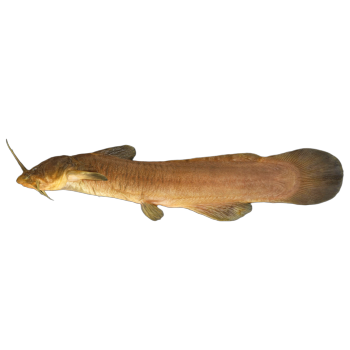
Rapids catfish
The whitewater catfish is a freshwater fish. It belongs to the Amblycipitidae family. These catfish live in cobbles, boulders and rock crevices on the riverbed. The whitewater catfish has sharp venomous spines on its pectoral and dorsal fins. The whitewater catfish usually grows to around 9 centimeters (3.5 inches) in length.

Pseudogobio esocinus
Long snout resembling a catfish, with 3, 7 dorsal fin strips; Pectoral fin strips 1, 14; Abdominal fin strips 1, 7; Hip fin strips 3, 6. Gill rakes 10-12. Two rows of swallowing teeth, 2.5 to 5.2. Side scale 42 [5/(3-V)] 43; Dorsal fin anterior scales 11-12; 12 scales around the caudal peduncle.

Qingchui
The medaka, also known as the rice medaka, is a species of fish in the family medaka and genus medaka. The body of the medaka is long, flattened, with a straight back and a round and narrow belly. The head is wide and flat. Small mouth, upper position, transverse fissure, longer lower jaw. Eyes are large, located on the upper side, and the distance between the eyes is wide and flat. The top of the head and gill cover are covered with scales. The dorsal fin is located at the back of the body. Qingchui is a small freshwater mid to upper level fish. It lives in ditches, paddy fields, ponds, and aquatic plants along rivers, lakes and reservoirs. Xi Qun swims in still and slow-moving water areas.
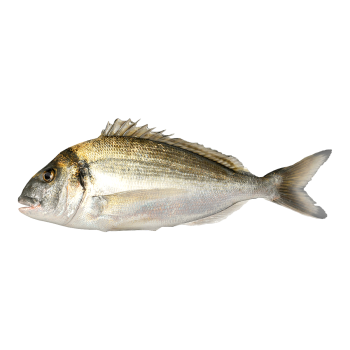
Pufferfish
The bream is a fish species belonging to the family Cyprinidae in the order Cypriniformes, also known as the bream, flathead bream, faro bream, black bream, lace bream, or triangular bream. The total length is about 40 centimeters, with a flattened body in a diamond shape and a raised head and back. The bream is distributed in Japan, the Atlantic, Australia, and New Zealand. Originating from the middle reaches of the Yangtze River in China, this lake is widely distributed in water systems such as Heilongjiang, Yalu River, Liao River, Yellow River, Huai River, middle and lower reaches of the Yangtze River, Qiantang River, and Min River. The production of bream in lakes is relatively high, with fast growth, delicious meat taste, high fat content, large body size, and unique aquaculture value.

Duck billed sturgeon
The duckbill sturgeon, scientific name American paddlefish, also known as paddlefish, is a fish species in the family Acipenseridae of the order Sturgeon. It is named after its shape resembling a duckbill and a spoon. The duck billed sturgeon is widely distributed in large rivers and nearby bay coasts in the central and northern regions of the United States. It lives year-round in freshwater lakes, reservoirs, and rivers without the need for migration and generally inhabits the middle and upper layers of water. The fish feeds on planktonic animals throughout its life. The duck billed sturgeon is a warm blooded fish with advantages such as fast growth, wide feed sources, low production costs, easy fishing, and high economic value. The juvenile duck billed sturgeon has a unique shape and can be used as a precious ornamental fish. The duck billed sturgeon eggs are processed into caviar.

Popular Models
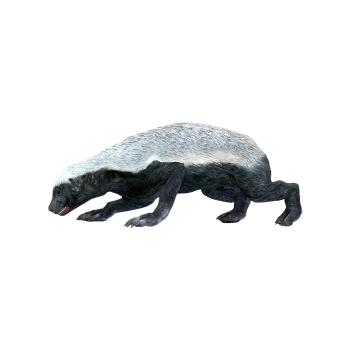
Honey Badger (3D animated model)
194 View
Guinea fowl (3D animated model)
165 View
Wild Goose (3D animated model)
187 View
Red Fox (3D animated model)
155 View
Random Model

Parlux 3000 hair dryer
920 View

Lion Cub 3D Model Animation
802 View




Oriental Angel Wing Screw Shell
640 View

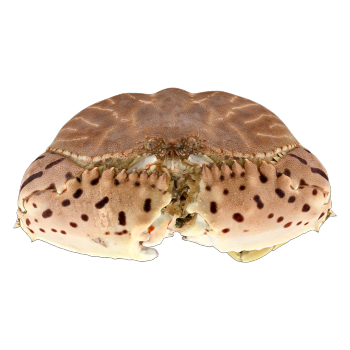
Curled Mantou crab
871 View
